
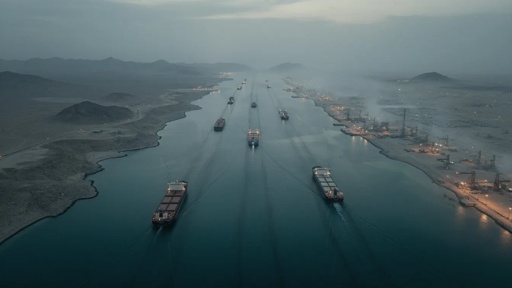
Iran’s Revolutionary Guard is now openly threatening to choke off Middle East oil and gas for everyone, testing American resolve and putting global energy – and your family budget – on the line.
Story Snapshot
- Iran’s Revolutionary Guard vows to stop all Middle East energy exports if U.S. and Israeli strikes continue.
- Tehran’s threats follow President Trump’s decision to reimpose a naval blockade on Iranian ports after ship attacks.
- The Strait of Hormuz, already badly disrupted, is once again the center of a global energy and security showdown.
- Legal experts say the U.S. blockade can be lawful in wartime, while Iran’s threats target civilians’ energy supplies.
What Triggered Tehran’s Latest Energy Threat
The United States military reimposed a naval blockade on Iranian ports after Iran attacked ships trying to pass through the Strait of Hormuz, a narrow waterway that carries a huge share of the world’s oil. American forces said the move came after days of Iranian strikes and harassment against commercial vessels, which had already brought traffic through the strait to a near standstill. President Donald Trump paired the renewed blockade with fresh airstrikes aimed at Iranian military targets linked to those attacks.
Tehran answered with a sweeping threat that reaches far beyond its own borders. Iran’s Revolutionary Guard announced that “the export of oil and gas from the region will be either for everyone or for no one,” warning it would move to halt all Middle East energy exports if U.S. and Israeli strikes do not stop. Reuters earlier reported the Guard had already vowed “not [to] permit a single drop of oil” to leave the region if assaults continue, claiming it would “determine the end of the war.”
How Iran Is Using Oil As A Weapon
Iran’s leaders have long used the Strait of Hormuz as leverage, but this war has pushed that tactic to a new level. Analysts note that Revolutionary Guard threats and attacks have effectively closed or severely disrupted the strait, which usually carries about one‑fifth of the world’s oil and liquefied natural gas. The International Monetary Fund described a “de facto closure” causing the largest oil market disruption in modern history as shipping companies pulled tankers from the route and storage filled up.
Reports say Iran is not just talking; it is using drones, missiles, and attacks on regional energy facilities to back up its warnings. One council on foreign relations analysis described how tanker traffic plunged after the Guard warned it would attack any ship trying to pass Hormuz in response to U.S. and Israeli strikes. Policy studies from major think tanks argue that Tehran is now waging “systemic energy warfare,” turning global supply chains into a pressure point to force Washington and its allies to back off. For American families, that means higher prices at the pump and renewed inflation risk, even as they are still recovering from earlier energy shocks.
Trump’s Blockade, The Law, And Freedom Of Navigation
Supporters of the Trump administration’s approach stress that the United States is acting against armed attacks, not peaceful trade. The U.S. Central Command has said the blockade is focused on ships entering or leaving Iranian ports, and that freedom of navigation remains for vessels heading to other countries’ ports through the strait. A detailed explainer on the plan notes that the U.S. Navy is also working to clear Iranian mines from Hormuz to keep non‑Iranian traffic safe.
On the legal front, an international maritime law expert told National Public Radio that a blockade can be a legitimate act during an armed conflict. He explained that under the Geneva Conventions, naval warfare rules apply when two states are in an armed dispute, even without a formal declaration of war, and that a blockade is a recognized tactic in those conditions. A separate analysis of U.S. naval pressure on Iran argues that a wartime blockade, if applied impartially and with notice, can fit long‑standing laws of naval conflict, even as some scholars still question its foundation.
What This Means For American Patriots And Their Wallets
For conservatives watching from home, this showdown is about more than ships and shipping lanes. Iran’s Revolutionary Guard is not just threatening the U.S. government; it is threatening every country that relies on Middle East fuel, including our own, by trying to turn oil and gas into a hostage of its regime. That approach hits working families hardest, as jumps in Brent crude prices feed straight into gasoline, heating, and grocery costs worldwide.
If Washington lets the word blockade stand over the Strait of Hormuz, it’s not a wording quirk. It’s an open invitation to miscalculation with Iran.
NPR says the U.S. plans to reinstate a blockade today. In law and practice, a blockade is a belligerent act: you’re no longer just…
— WAR (@War__Alerts) July 15, 2026
At the same time, many on the right see the blockade as a test of whether America will defend freedom of navigation and stand up to a theocratic military that openly targets civilian energy flows. Policy experts warn that if Iran succeeds in weaponizing a fifth of the world’s oil supply, other hostile regimes will copy the playbook. For Trump supporters who remember years of high energy prices and “green” experiments under past left‑wing governments, the stakes are clear: real security means reliable fossil fuel flows and firm U.S. power, not appeasement.
Sources:
military.com, reuters.com, youtube.com, moneycontrol.com, sahmcapital.com, bbc.com, apnews.com, npr.org, scspi.org, energypolicy.columbia.edu, imf.org, cfr.org, thesoufancenter.org, hudson.org, rsis.edu.sg