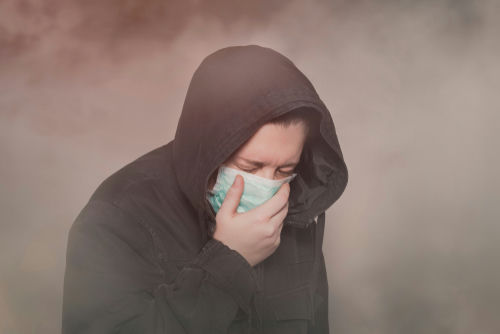
Toronto woke up to the kind of toxic orange haze many Americans now fear could become the new normal.
Story Snapshot
- Toronto’s air briefly ranked as the **worst in the world** as wildfire smoke from northern Ontario rolled in.
- Environment Canada issued an **orange air quality warning** and urged people to cancel outdoor activities and stay inside.
- Health officials warned of **serious risks from fine smoke particles**, especially for children, seniors, and people with lung or heart problems.
- The same shifting winds that hit Toronto are now pushing smoke toward major U.S. cities around the Great Lakes and East Coast.
Toronto’s Sudden Drop into “Worst Air in the World”
On Wednesday morning, residents in Toronto looked out their windows and saw a sky turned thick yellow and orange by wildfire smoke drifting south from forest fires in northwestern Ontario. Around 8 a.m., the Swiss air tracking service IQAir ranked Toronto as having the worst air quality of any major city in the world, briefly surpassing Kinshasa and Delhi on its real‑time pollution list. Local coverage described streets and skylines swallowed in haze, with familiar landmarks fading behind a smoky curtain. The shock for many was not only the ranking but how fast it happened; just hours earlier, the city looked like any other summer day before the smoke plume settled in.
Environment Canada, the national weather and air agency, responded by issuing a special warning for Toronto, moving the city into an orange air quality alert due to “very high levels of air pollution” from wildfire smoke. The Air Quality Health Index for Toronto jumped to 10+, the system’s very‑high‑risk category. Officials urged residents to limit their time outdoors, reduce or reschedule strenuous activities, and keep windows and doors closed whenever possible. This warning came on top of an ongoing yellow heat alert, creating a double strain on people who cannot afford air conditioning or who rely on outdoor work to earn a living.
What the Smoke Means for Health and Daily Life
Health agencies explain that the biggest danger in wildfire smoke comes from fine particles known as PM2.5, which are tiny bits of pollution small enough to travel deep into the lungs and even into the bloodstream. Canada’s federal health guidance says there is no clearly safe level of exposure to some of these particles, and smoke can still harm people even if they feel fine in the moment. Ontario’s public health review of the 2023 fire season found that days with heavy smoke were followed by sharp jumps in asthma‑related emergency room visits, sometimes up to 23 percent higher. During this week’s event, officials again highlighted risks for children, seniors, pregnant women, people with chronic heart or lung disease, and outdoor workers, all told to avoid hard physical activity and seek care if they developed symptoms.
For ordinary families, those warnings translate into missed school sports, changed work schedules, and the cost of staying indoors in hot weather. Environment Canada advised people who have to be outside to wear well‑fitted masks such as N95 respirators to cut down on particle exposure, but many low‑income residents struggle to buy enough masks for their households. As agencies urged people to keep homes closed up against the smoke, they also told them to prioritize staying cool during extreme heat, a difficult balance for those living in older buildings or crowded apartments. The same kind of trade‑offs frustrate both conservatives and liberals who feel the system leaves vulnerable people to fend for themselves whenever a new crisis hits.
Wildfire Smoke, Cross‑Border Impacts, and Growing Public Anger
Scientists at institutions like the National Center for Atmospheric Research have long warned that wildfire smoke can travel thousands of miles, cross continents, and create hazardous air even far from the original fires. That pattern played out again as smoke from northern Ontario spread not only across Toronto but into much of southern Ontario and toward American cities around the Great Lakes and the Northeast. Air quality alerts went up in parts of Michigan, Minnesota, Wisconsin, and were forecast to reach areas like New York and Washington as the plume continued eastward. For many on both sides of the border, it is hard to ignore how one region’s fires now regularly become another region’s health emergency.
Northern Canadian Media with Claire McKenzie
The wildfire smoke we reported on yesterday has now intensified across southern Ontario, bringing hazardous air quality to millions of people.
Toronto spent part of Wednesday ranked among the worst cities in the world for air… pic.twitter.com/FHNmXGJLvm
— Northern Canadian Media (@NorthernMediaCA) July 15, 2026
Commercial trackers like IQAir, which run global “worst air” lists that update by the hour, add drama but also reveal how often cities now swing into dangerous zones when fires erupt. Toronto itself has appeared near the top of global pollution rankings several times over the past few fire seasons, sometimes second to Baghdad or ranked among the ten worst major cities worldwide. Media outlets benefit from the shock value of “world’s worst air” headlines, yet the constant repetition sends a darker signal that many governments are not keeping up with rising climate and disaster risks. People across the political spectrum see events like this as another sign that leaders talk about resilience and clean air while everyday citizens choke on smoke, juggle heat warnings, and worry about kids with asthma. As more summers bring sky‑darkening fires and health alerts from Toronto to New York, it feeds the belief that distant bureaucracies and powerful interests are protected while ordinary people breathe the fallout.
Sources:
insiderpaper.com, globalnews.ca, cbc.ca, ctvnews.ca, stillcoviding.ca, theweathernetwork.com, nature.com, iqair.com, toronto.ca, ncar.ucar.edu