
New York’s governor is begging millionaires to come back, but the data says most never left in the first place — and the real squeeze may be hitting everyone else instead.
Story Snapshot
- Governor Kathy Hochul blames Donald Trump’s tax law and COVID for wealthy New Yorkers leaving.
- Critics say high state taxes and “Tax the Rich” politics pushed billions of dollars of income to Florida and other low-tax states.
- Independent studies find millionaire migration was small, mostly temporary, and often to other high-tax states.
- Working- and middle-class New Yorkers are leaving in larger numbers, driven by high costs and a failing system.
Hochul’s plea to the rich and her Trump–COVID explanation
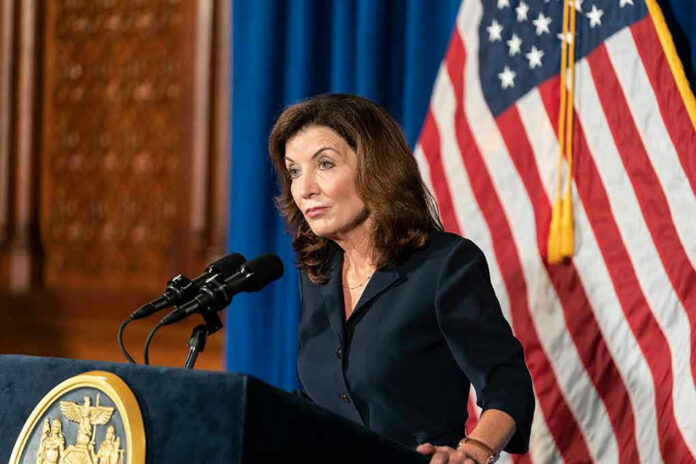
Governor Kathy Hochul has sparked national debate by publicly asking wealthy former New Yorkers to move back and “support” the state’s social programs. On TV, she said a key reason the rich left was the 2017 Trump tax law that capped the State and Local Tax deduction, which raised federal tax bills for high earners in high-tax states like New York. She also blamed the COVID pandemic, saying families with second homes in Palm Beach moved south when New York City shut down and “everybody’s getting sick.”
Hochul insists she will not raise taxes on high-net-worth individuals or the companies that create jobs, arguing that New York is already in tough competition with lower-tax states. She has called the remaining wealthy residents “patriotic,” and said the state’s tax base has been “eroded,” so she needs affluent people to fund generous social initiatives. To many voters on both the left and right, this sounds like the state is hooked on rich taxpayers while everyday families struggle to stay afloat.
Media narrative: “Tax the Rich” vs. budget reality
Conservative outlets and many online commentators frame the story very differently. They highlight Internal Revenue Service migration data and studies from taxpayer groups showing high earners and their income flowing out of New York toward states like Florida and Texas, which have no state income tax. One analysis cited by critics claims New York has already lost around $10–12 billion a year in income as wealthy filers moved, while Florida gained over $20 billion. This feeds a long-standing belief that high taxes, “woke” policies, and hostility to business drive prosperity away.
These same outlets also replay Hochul’s 2022 rally remark telling people who do not share her politics to “jump on a bus and head down to Florida,” and contrast it with her current plea for the rich to return. For many conservatives, that feels like elites talking tough when times are good, then begging for help once the bill comes due. For many liberals, it looks like a system that protects the rich either way — warning against higher taxes while asking them to stay and fund programs that never seem to fix housing costs, medical bills, or the growing gap between the haves and have-nots.
What the independent data says about millionaire migration
A different picture comes from the Fiscal Policy Institute, a nonpartisan research group that studied tax filings and migration before, during, and after COVID. Their work finds no significant rise in millionaire departures after New York’s 2017 and 2021 tax increases on top earners. In normal years, only about two out of every 1,000 top earners leave New York, a rate far below that of the general population. By early 2023, migration levels among high earners had largely returned to pre-pandemic patterns, suggesting the COVID-era spike was temporary, not a permanent “flight.”
The same report notes that more than three-quarters of wealthy households who left during the pandemic went to other high-tax states such as Connecticut, New Jersey, and California, not only to tax havens in the Sun Belt. Another summary of the research points out that nationally, only a tiny fraction of millionaires move to lower-tax states in a given year. Their main reasons for moving tend to be work, lifestyle, and family, not tax bills alone. At the same time, the share of New York’s income tax revenue paid by millionaires has actually grown since the 2021 tax hike, meaning many wealthy residents stayed and now shoulder a larger part of the budget.
COVID, remote work, and the squeeze on regular New Yorkers
There is still real change underneath the political drama. Researchers who looked at COVID’s impact argue the pandemic briefly broke the “gravity” that kept high earners tied to cities. Offices closed, school routines shattered, and downtowns felt empty and unsafe. High earners who could work from anywhere suddenly had the freedom to try life in a warmer, cheaper, or lower-tax state. This did cause a short-term jump in tax migration, but the same work shows patterns settled back once life normalized and social ties pulled many families home.
NYC Mayoral Candidate Zohran Mamdani's Tax Plan Sparks Debate as Report Warns of Wealthy Residents Leaving New York
A new report has raised concerns that New York could lose billions of dollars in tax revenue if more high-income residents leave the state, as New York City mayoral… pic.twitter.com/F8e0EP567Z— Voice of Germany (@NewsVOG) July 16, 2026
Meanwhile, the bigger and more lasting exodus may be among working- and middle-class New Yorkers. Reporting based on the Fiscal Policy Institute’s data finds that New York’s millionaire class has grown overall, even as large numbers of lower-income residents leave. For many of those families, the driver is not state tax brackets but crushing housing costs, child care prices, and the sense that the system is stacked for the wealthy. That reality matches what both conservatives and liberals complain about: a federal and state government that protects insiders, argues over which elite group to blame, and leaves ordinary people fighting just to stay in the city where they grew up.
What this fight reveals about trust in government
The clash over Hochul’s comments is not only about numbers; it is about trust. When governors blame Trump, COVID, or remote work, many hear leaders dodging responsibility for long-running policy choices that made their states expensive and bureaucratic. When conservative media talks only about tax rates, many hear pundits ignoring deep problems like housing, health costs, and low wages. Both sides point fingers at “elites,” yet the basic pattern remains: politicians rely heavily on a small group of wealthy taxpayers while everyday residents feel like an afterthought.
For readers across the spectrum, the takeaway is sobering. The best available data says millionaire migration is real but limited and mostly tied to COVID and remote work. Taxes matter, but they are not the sole driver. At the same time, New York is losing many non-rich residents who simply cannot make the math of daily life work. The fight over whether to “beg” the rich or “tax the rich” risks missing the core issue that both conservatives and liberals feel in their gut — a government that talks about fairness but struggles to deliver a stable, affordable path to the American Dream.
Sources:
redstate.com, foxnews.com, youtube.com, finance.yahoo.com, newsinsights.org, facebook.com, fiscalpolicy.org