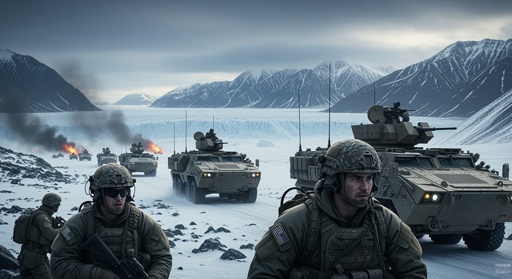
In the sweltering Texas heat, American troops now battle simulated Arctic hell to counter Russia’s aggressive push into melting ice territories threatening U.S. security.
Texas Heat Meets Arctic Freeze
Baylor University’s ARKTOS research center inside the BRIC facility in Waco, Texas, simulates arctic conditions down to -35°C. U.S. military personnel train there to handle extreme cold. The program tackles challenges of shifting from Texas heat to arctic environments. These shifts disrupt sleep, circadian rhythms, mental states, and performance. A Fort Sam Houston military leader requested the studies on acclimation and sleep optimization. Congressman Pete Sessions secured $1 million in funding for the center.
Strategic Arctic Revival Under Trump Administration
U.S. military interest in Arctic operations surged post-Cold War due to geopolitical shifts. Climate change melts ice caps, opening new routes and intensifying competition from Russia and China. The Department of Defense and Army issued Arctic strategies, reviving capabilities idle since the 1980s. In Trump’s second term, with Republican control of Congress, such investments prioritize America First defense. This counters adversaries encircling U.S. interests, ensuring troops stand ready without relying on globalist entanglements.
The Army developed Techniques Publication 3-90.96 on Arctic and Extreme Cold Weather Operations. Published after two years of multinational collaboration around 2024-2025, it marks the first such manual in over 50 years. Contributors include the U.S. Army Combined Arms Center, Northern Warfare Training Center, Marine Corps Mountain Warfare Training Center, and 11th Airborne Division. Arctic challenges feature -40°C to -60°C temperatures, 24-hour day/night cycles, disrupted communications, and mobility hurdles.
Training Innovations Bridge Readiness Gaps
Arctic Edge 2024 exercise ran from February 23 to March 11 in Alaska. U.S. Marines and USNORTHCOM tested HIMARS systems, radar, C-130 logistics, and Cold Weather Infantry Kits in real conditions. Baylor’s lab-based ARKTOS complements field training for heat-acclimated troops. Experts like Dr. Corey Smith and Dr. Jason R. Carter at Baylor study heat-to-cold transitions. Dr. Carter stated troops will operate in the Arctic far more, investing in their future performance.
Army doctrine stresses 80% training and 20% equipment for cold success. Unprepared units suffer more from weather than enemies. Recent pilots tested nanofibers in socks and gloves, plus biosensors for vital signs. Special Operations Command North’s Arctic Medic program teaches stealth care, like skiing in storms and using heat bubbles for patients. Congressman Sessions emphasized building physical and mental attributes now, as forces reach critical thresholds.
Impacts on Troops and National Security
Short-term gains include better soldier survival and mobility through insulated gear and heat bubbles, slashing cold injuries. Long-term, prepared forces secure Arctic dominance amid geopolitical and climate shifts. Troops benefit from reduced weather casualties; Texas gains jobs and funding at Baylor; Alaska sees more operations impacting natives. Economically, $1 million plus spurs research and cold-weather innovations like nanofibers and biosensors.
Politically, Arctic elevates as a DoD priority under GOP-led government, standardizing training via downloadable manuals and shaping joint doctrines. Both conservatives valuing strong defense and frustrated citizens across aisles see this as rejecting elite neglect. Government finally invests in troops over endless spending sprees, aligning with founding principles of secure borders—including frozen frontiers—and self-reliant might against foreign threats.
Sources:
U.S. Soldiers Conduct Arctic Ops – JPMRC 26-02
Arctic research facility at Baylor University helps military
Arctic Edge 24 Marines Conduct Cold Weather Training Exercise